
Tim Braheem Interview
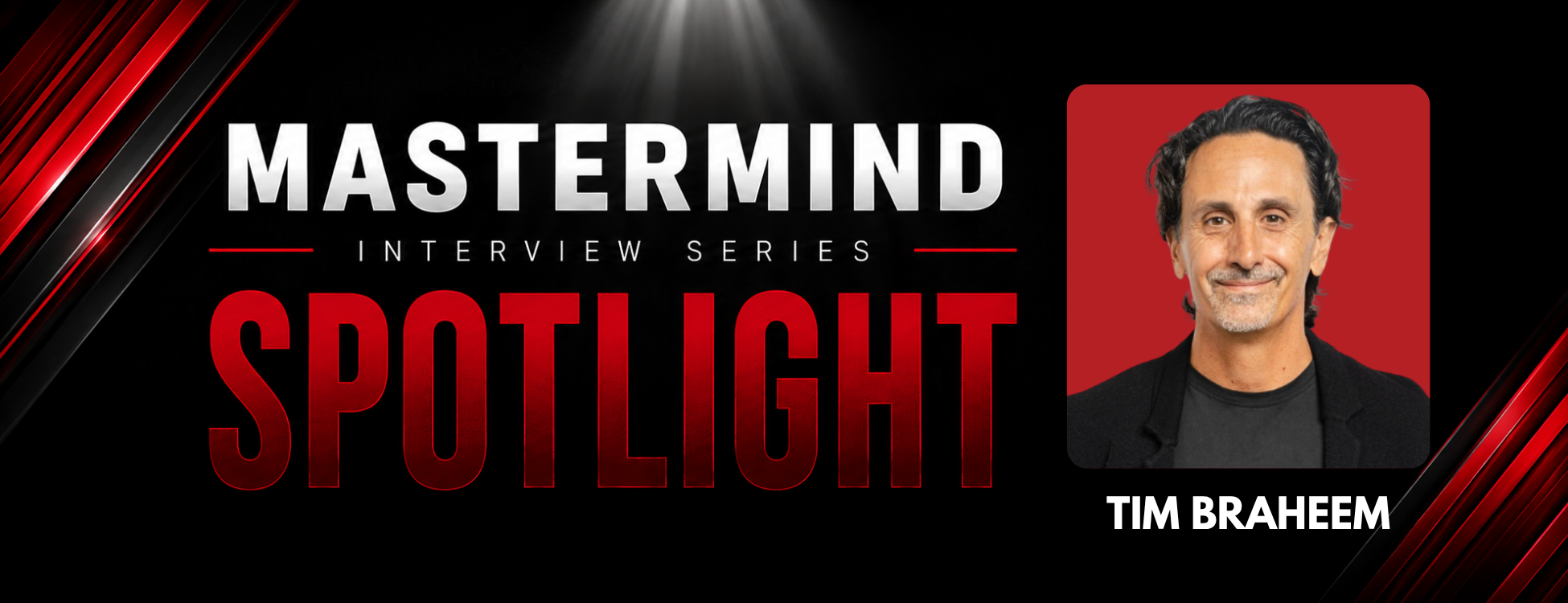
Success in the mortgage industry has never been about waiting for the perfect market. It’s about mindset, discipline, relationships and the ability to recognize opportunities others may overlook. Few people understand that better than Tim Braheem.
As a longtime mortgage industry leader and coach, Tim has spent years helping loan officers break through limiting beliefs, sharpen their sales skills and build more consistent, relationship-driven businesses. His philosophy centers on a simple idea: the best originators don’t wait for conditions to improve. They focus on what they can control, stay curious and keep creating meaningful connections.
In this conversation, Tim shares practical lessons on prospecting, lead follow-up, Realtor relationships, client experience, AI and the mindset required to succeed in a changing market. From why “the loan officer with the most friends wins” to the importance of replacing scarcity with curiosity, his insights offer a roadmap for building a stronger business regardless of what the market is doing.
You often say that success starts with removing internal barriers. What's the biggest limiting belief holding loan officers back in today's market, and what does replacing it with a healthier belief look like?
The biggest limiting belief loan officers are carrying today is the idea that there simply aren't any loans available. Many believe higher interest rates have created an environment where business has disappeared.
I know that's not true because I work with too many loan originators who continue to produce exceptional volume, even with rates around seven percent.
That belief is rooted in scarcity. When you're operating from scarcity, your focus narrows and becomes fixated on the problem itself. Instead of seeing opportunities, you only see obstacles.
A healthier belief is to ask a different question: Where is the blue ocean that no one else is swimming in? Where are the opportunities that everyone else is overlooking?
Right now, for example, we're back in a debt consolidation environment. Many homeowners have stayed put since before COVID because they've come to view their low-interest mortgage as an asset. They can't justify moving because today's rates are higher.
That creates an opportunity for meaningful conversations. Talk with past clients about debt consolidation. Explore whether renting their current home could create positive cash flow while using low-down-payment financing to purchase the home they really want.
Throughout my career, the best originators have never waited for ideal market conditions. They find business in difficult markets because they're willing to think differently, look beyond conventional solutions, and discover opportunities others miss.
You've coached many of the industry's top producers. What's one habit or discipline they consistently share that most average producers overlook?
This may sound overly simple, but the best producers consistently talk to people who need mortgages.
The top originators I know remain singularly focused on creating opportunities to sell. That can happen through marketing, but it also comes from maintaining consistent contact with past clients, checking in with them, asking how they're doing, and looking for ways to serve them.
They're also disciplined about prospecting, building new referral relationships, and scheduling appointments with potential partners.
At the end of the day, they understand a fundamental truth: this is a sales business.
The more consistently you're having meaningful conversations with people who need financing, the more successful you're going to become.
If you were starting over as a loan officer today with no database, no referral partners, and today's interest rates, what would your first 90 days look like, and where would you spend the majority of your time?
My first ninety days would be spent out in the world connecting with people.
The first thing I'd do is make a list of everyone I know who already has some degree of respect and appreciation for me. Then I'd reach out with a simple, heartfelt message explaining that I'm building a career as a loan originator, that I've invested in learning my craft, and that I'd love the opportunity to help them or anyone they know.
I'd ask a straightforward question:
"Who do you know that would be a good introduction for me?"
That could be a homeowner, a prospective buyer, a real estate agent, an accountant, or anyone who might benefit from what I do.
I'd also spend a tremendous amount of time visiting open houses, delivering value-driven marketing pieces to real estate offices, and meeting people face-to-face. Success in this business has always been built on human connection.
I'd also establish a marketing budget from day one.
Too many new loan officers start with no budget whatsoever, and that's a mistake. Every successful business requires investment. Whether it's creating marketing materials, buying lunch for a referral partner, or hosting educational events, you have to reinvest in your business.
Even a modest budget of $1,000 per month, used strategically, can produce tremendous returns.
Many loan officers are busy, but not necessarily productive. What are the biggest signs someone is confusing activity with progress, and how can they break that cycle?
One of the biggest mistakes I see is loan officers spending far more time preparing to sell than actually selling.
Preparation has value. Creating presentations, marketing materials, and improving your process all matter.
But nothing replaces conversations with people who need financing.
Learning this business is much like learning a new language. The fastest way to improve isn't endless preparation. It's immersion. You learn by having conversations, making mistakes, adjusting, and improving through experience.
Too many originators stay busy planning while avoiding the one activity that actually produces results: talking to prospective clients.
Progress comes from action, not preparation.
You've built systems that create consistency instead of relying on motivation. What's the one system every loan officer should implement if they want to build a more predictable business?
If I had to choose one system, it would be a disciplined lead follow-up process.
When I first entered the business, I kept handwritten index cards for every prospect. After every conversation, I'd record notes and create reminders for exactly when I needed to follow up. Eventually that evolved into a CRM, but the principle never changed.
Your job isn't simply generating leads. Your job is converting them.
That means every prospect should move through a consistent, repeatable follow-up process.
If someone doesn't apply after the first conversation, when will you contact them again? What valuable information will you send them? How will you remain top of mind?
This philosophy eventually led me to create my personal brochure, which became one of my most effective marketing tools.
The follow-up process shouldn't end because you get discouraged or impatient. It ends only when the client tells you they're no longer interested.
Too many loan officers lose business simply because they don't have a consistent system for staying in touch. The loans they should have closed often end up going to someone else.
You built your reputation around creating exceptional client experiences. What are one or two simple touches that consistently turn clients into lifelong advocates and referral sources?
It starts with one guiding principle: under-promise and over-deliver.
The hallmark of a great customer experience is exceeding expectations. There are countless ways to do that, but two simple habits have consistently made the biggest difference for me.
The first is writing a handwritten thank-you note after your initial conversation with a client. Keep blank note cards at your desk—not branded stationery with company logos. Take ninety seconds to write something personal.
Tell them you enjoyed speaking with them. Mention one or two things they shared that were important to them. Let them know you're looking forward to serving them and that you're available if they need anything.
The goal isn't to market yourself. It's to create a genuine human connection.
The second habit is making a post-closing phone call about two weeks after the transaction closes. By then, they've settled into their new home and can actually enjoy the conversation.
Ask how they're doing. Ask how they're settling in. If they have children, ask how they're adjusting to the neighborhood.
Then ask one of the most important questions you can ask:
"Looking back on your experience working with us, what's one thing you wish we had done better?"
I ask because I genuinely want to improve. If we work together again—or if they trust me enough to refer friends and family—I want their next experience to be even better.
That conversation leaves a lasting impression because it demonstrates humility. After the loan has closed and I've been paid, I'm still asking how I can serve them better. That's the kind of experience people remember and share with others.
What's one mistake you see loan officers repeatedly making with Realtor relationships, and what's the mindset shift that usually fixes it?
The biggest mistake loan officers make is trying to sell themselves during the first meeting.
They spend the appointment explaining why they're different, why they're better, and why the Realtor should send them business.
That's exactly the wrong approach.
Everything changed for me when I shifted my mindset. Instead of trying to convince Realtors to work with me, I approached every first meeting as an opportunity to get to know them and determine whether they were someone I wanted to work with.
That subtle shift changes everything.
When the meeting becomes about understanding them instead of promoting yourself, people relax. Their guard comes down because they don't feel like they're being sold.
Ask thoughtful questions. Listen carefully. Reflect back what you hear. Make the conversation about them.
People enjoy feeling seen and understood. When you create that experience, you naturally become more attractive as a business partner because you're no longer chasing the relationship.
Ironically, the less focused you are on closing the Realtor, the more likely they are to want to work with you.
AI is changing how loan officers work. Where do you believe AI creates the greatest opportunity, and where do you believe authentic human connection becomes even more valuable?
AI has enormous potential to improve efficiency.
It can help create marketing materials, summarize client conversations, organize notes, communicate with your team, and streamline countless administrative tasks. Those are tremendous advantages.
Where I believe people need to be careful is allowing AI to replace genuine human connection.
Every new technology creates excitement, but it's important to remember why clients ultimately choose to work with us.
Several years ago, everyone believed success meant posting multiple videos every week and building massive social media followings. Plenty of people accumulated hundreds of thousands of followers, yet very few could point to meaningful loan production that resulted directly from those audiences.
The lesson is the same with AI.
Use it to make yourself more efficient, but don't allow it to replace the conversations that actually build trust.
Every hour you spend perfecting AI-generated content is an hour you aren't calling a past client, meeting a Realtor for lunch, talking with a builder, or strengthening an existing relationship.
Technology should enhance human connection, not replace it.
You teach that our thoughts shape our emotions, our emotions shape our energy, and our energy influences every interaction we have. How much of a loan officer's success is determined before they ever pick up the phone?
A significant amount.
Think about every important interaction in this business. Whether you're calling a client, meeting with a Realtor, teaching a Lunch & Learn, or sitting down with a CPA, you walk into that conversation carrying a particular mindset.
Your thoughts create your emotions. Your emotions influence your energy. And people respond to that energy whether they realize it or not.
We've all experienced what happens after closing a loan. You receive a "yes," confidence rises, and suddenly you're eager to make the next phone call because you're operating from abundance. You're optimistic, relaxed, and naturally more engaging.
We've also experienced the opposite.
If you're thinking, I desperately need this deal, or I have to convince this Realtor to work with me, you enter the conversation operating from scarcity and fear.
People can feel that.
Instead of attracting opportunities, you're trying to force them.
Success often begins long before the conversation itself. It begins with the thoughts you choose before you ever pick up the phone.
Every loan officer has experienced the day where one difficult file, one upset client, or one tough conversation derails everything else. Why does that happen psychologically, and what can people do to reset before one setback turns into a lost day?
Our minds naturally create stories.
One disappointing event can quickly snowball into an imagined worst-case scenario.
You lose a deal, and suddenly your mind tells you that the Realtor will never work with you again. Then it tells you they'll tell everyone else in the office not to work with you. Before long, you've convinced yourself your entire business is falling apart.
In reality, you jumped from Point A to Point Z without stopping anywhere in between.
The practice that interrupts this pattern is slowing down.
Take a breath. Become aware of your thoughts and ask yourself a simple question:
"Is this actually true?"
Can you know with certainty that the story you're telling yourself is accurate? Or are there other possibilities?
Maybe all that's required is a sincere phone call, an honest apology, or a cup of coffee to rebuild trust. Maybe the relationship isn't lost at all.
When you slow your thinking, you create space for better decisions.
Instead of reacting emotionally to a setback, you respond intentionally. That allows you to preserve relationships, regain perspective, and prevent one difficult moment from becoming a lost day.
You've said that our desire to control outcomes is often rooted in fear. How can loan officers recognize when they're operating from fear instead of confidence, and what helps them make that shift?
At the core of nearly every emotional experience are two primary emotions: love and fear. Everything else falls under one of those categories.
Control is almost always rooted in fear. If you peel back the layers of any situation where you're trying to control the outcome, you'll usually discover there's something you're afraid of losing.
If fear weren't present, there would be no need to control.
The opposite of fear isn't confidence. It's trust and surrender.
When you're operating from trust, you can let go of trying to force an outcome because you believe you'll be able to navigate whatever happens.
So how do you recognize when you're operating from fear?
You feel it.
Fear shows up as stress, anxiety, fixation, and an inability to let something go. Think about an appraisal coming in low. We've all experienced how one issue can consume an entire day. Your mind keeps returning to it, replaying every possible negative outcome.
In those moments, it's important to zoom out and remember the bigger picture.
Ask yourself, "What can I control, and what needs to be trusted?"
Your team is working on the appraisal. The review process is underway. Meanwhile, you still have leads to follow up with, clients to serve, and relationships to build. Redirect your energy toward what you can influence instead of obsessing over what you can't.
Now, confidence is a different conversation.
Confidence comes from competence.
If you don't know how to respond when a Realtor says, "I already have a lender," you'll naturally feel uncertain. But if you've practiced that conversation, studied proven sales strategies, and developed your skills, confidence follows.
That's why education matters. The more competent you become, the more confidence you develop. And the more confidence you have, the less fear controls your decisions.
You encourage people to replace certainty with curiosity by asking questions like, "What am I missing?" and "What can I learn from this?" Why is curiosity such a competitive advantage in sales, leadership, and life?
Curiosity is the foundation of growth.
Think about young children. They're naturally curious. They're constantly asking questions, exploring new ideas, and trying to understand how the world works. That's why they learn so quickly.
Unfortunately, many adults lose that curiosity over time. They begin believing they already know the answers, and when curiosity fades, growth begins to slow.
One of the practices I try to maintain is approaching life with a beginner's mind.
The more curious I am about another person's perspective, a different business strategy, or a new way of thinking, the more opportunities I have to grow.
This is especially important in our industry.
I've worked with loan originators who've been in the business for 25 or 30 years and gradually stopped asking questions. Their methods became fixed, and over time they felt like the industry had passed them by.
Compare that to someone who's just starting out. They don't have years of habits to unlearn. They're open, coachable, and eager to absorb new ideas. That openness gives them an incredible advantage.
Curiosity keeps you adaptable.
It challenges assumptions, expands your thinking, and creates opportunities you wouldn't have seen otherwise.
Whether you're leading a team, building relationships, or serving clients, your willingness to stay curious often determines how much you'll continue to grow.
The mortgage industry has gone through tremendous change over the past few years. What mindset separates the professionals who continue to grow through uncertainty from those who wait for the market to change?
The answer is curiosity.
The professionals who continue to thrive don't spend their time wishing the market were different. They ask better questions.
Instead of saying, "Rates are too high," they ask, "Where are the opportunities in this market?"
Instead of assuming business has disappeared, they become curious about new strategies.
Maybe it's debt consolidation.
Maybe it's reverse mortgages.
Maybe it's helping homeowners turn their existing property into a rental while purchasing another home.
The point is that they refuse to accept the first answer their mind gives them.
A fixed mindset sees obstacles.
A curious mindset discovers possibilities.
The loan officers who continue to evolve are the ones who stay open, keep learning, and remain willing to explore opportunities that others overlook.
If every loan officer reading this could adopt just one principle from your coaching philosophy over the next year, what would it be, and why?
Make friends.
The loan officer with the most friends wins.
That doesn't mean collecting business cards or adding people to a CRM. It means becoming someone others genuinely enjoy connecting with.
Being connectable requires vulnerability. It requires asking for help, sharing your story, taking a sincere interest in other people, and being fully present in every conversation.
Become curious about people's lives. Listen more than you talk. Brighten someone's day. Make them feel seen and valued.
Yes, your profession will naturally come up in conversation, but it shouldn't be the centerpiece. The relationship should always come first.
Imagine spending the next year with one primary goal: connecting deeply with people.
What if, over the next twelve months, you had meaningful conversations with 200 people? Not rushed interactions, but real conversations where someone walked away thinking, "I really like that person."
That's fewer than one meaningful connection for every business day in a year.
What would happen to your business if you consistently built relationships like that?
I believe the results would surprise you.
Because that's exactly how I built mine.