
Ryan McDonnell Interview
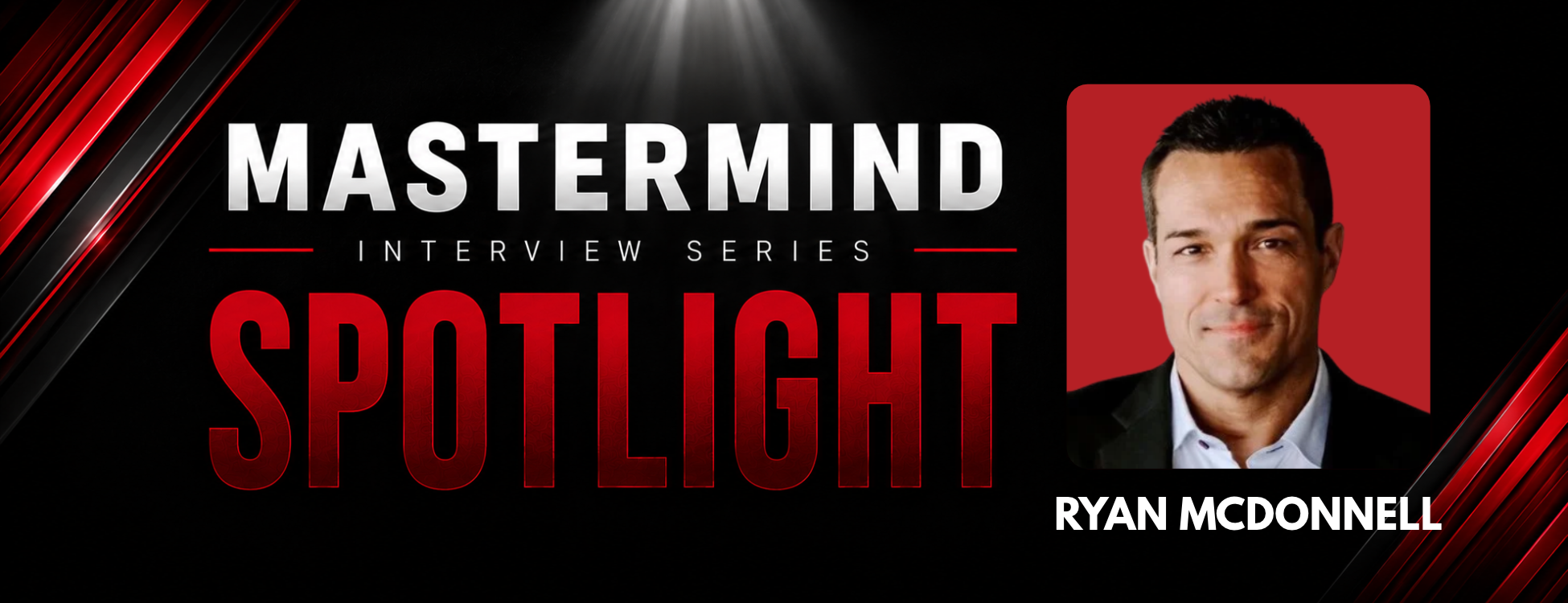
For Ryan McDonnell, the role of a loan officer extends well beyond helping someone secure financing. His approach centers on education, strategy, and helping clients understand how their mortgage fits into the bigger picture of homeownership and long-term financial goals. As Branch Manager and founder of the BuyerPower Lending Team, Ryan has combined his experience in mortgage lending, business ownership, and real estate investing to build a business focused on creating value at every stage of the client relationship.
In this Mastermind Spotlight, Ryan shares how loan officers can differentiate themselves through education, strengthen relationships with clients and referral partners, and help buyers compete more effectively in challenging markets. He also discusses building a consistent client experience, shifting conversations beyond interest rates, and becoming a mortgage professional clients continue to rely on long after closing.
You've spent more than 20 years in lending and finance. What do you know about building a successful mortgage business today that you wish you understood when you were first getting started?
Early in my career, I thought success was about grinding as hard as possible and making as much money as possible. At that point, I didn't even know if the mortgage business was going to be my forever career or just a job, so I approached it like a salesperson. Win the deal. Close the loan. Make the money. Move on to the next one. What I didn't understand then was the importance of treating my business like an actual business.
That means becoming a master of your craft, understanding guidelines well enough to solve complex problems, building real relationships, nurturing your database, and staying connected to people long after the transaction is over. If you do that consistently, over time you start building what I think of as an annuity stream of income. Past clients come back. They refer their friends and family. Referral partners continue to trust you. You're no longer starting from zero every month.
For me, that really clicked around 2013, about halfway through my career. I realized that if I didn't want to be perceived as a commodity, I had to become indispensable. That caused us to completely rethink our process, the value we provided to clients and referral partners, and the level of professionalism with which we operated the business. If 25-year-old Ryan walked into my office today, I'd tell him to master the guidelines, learn how to solve difficult puzzles, and nurture the hell out of every good relationship he builds. I'd also tell him to stop selling broke.
A lot of loan officers spend the early part of their careers obsessing over where the next deal is coming from, and that desperation comes through. Clients and referral partners can feel it. Instead of worrying about every individual transaction, focus on doing the right activities every single day. Be consistent. Take great care of people. Keep building relationships. The individual deals will come, but more importantly, you'll build a foundation that can produce a strong and lasting pipeline for decades.
You've built your business around the idea that a mortgage professional should help clients manage their mortgage debt before, during, and after the transaction. What does that look like in practice, and how can loan officers create relationships that continue long after closing?
To me, managing mortgage debt means committing to a lifelong relationship with each client and then actually executing on that commitment. We call it “clients under management,” and that relationship starts well before somebody ever gets the keys to their home. Before the transaction, I spend a tremendous amount of time on education. On average, I’ll spend two one-hour consultations with a client before they buy. We’re not just talking about what interest rate they can get or the maximum purchase price they qualify for. I want them to fully understand the responsibilities of homeownership, how the mortgage fits into their overall financial picture, and the decisions they can make today that will put them in a better position five, ten, or twenty years from now.
A big part of that is financial literacy. Depending on the client and their situation, we may also connect them with one of the CPAs or financial advisors in our network so they can think about taxation, wealth building, investing, and their broader financial strategy before making what is probably one of the largest financial decisions of their life. During the transaction, our job is obviously to execute at a very high level, but it’s also to continue educating. We want our clients to understand the decisions they’re making instead of simply telling them what loan program to choose. There’s a big difference between getting somebody approved for a mortgage and helping them make a smart mortgage decision.
Then, after closing, that relationship should continue for as long as they own real estate. That means annual mortgage reviews, Strike-Rate Refi™ opportunities, debt consolidation strategies, mortgage market updates, home anniversary touches, and regular check-ins. But over the years, we’ve also evolved into more of a financial advisory role with our clients. There have been countless situations where we’ve connected someone with an excellent CPA or financial advisor and helped them think through ways to build wealth or reduce taxation outside of the mortgage itself.
The other big piece is making sure the communication is actually useful. I’m not a fan of sending somebody a canned newsletter showing them how to bake a pie and pretending that’s relationship management. To me, that stuff is useless. We want to be intentional and tactical. We provide our clients with technology that helps them manage what is usually their single largest asset. They can track their home’s value, understand their equity position, and see ways that certain home improvements could potentially increase the value of the property. A high percentage of our clients actually engage with that information every month because it matters to them.
And we see the results of that continued communication all the time. A client will reach out because they received one of our mortgage market updates, saw a change in their home’s value, or learned about an opportunity to restructure their debt. That starts a conversation, and sometimes that conversation puts them in a materially better financial position.
I think one of the biggest mistakes loan officers make is closing the loan and then ceasing to nurture the relationship. They disappear, they don’t do reviews or check-ins, and then the only time the client hears from them again is when rates drop.
A mortgage isn’t just a transaction or a product. It’s an ongoing financial tool. Even if the average consumer only gets another mortgage every several years, there are plenty of opportunities to remain relevant and provide meaningful value during that time. Our philosophy is pretty simple: the mortgage may be where we make our money, but it shouldn’t be the only place where the client receives value from us.
Your BuyerPower approach is designed to help financed buyers compete more effectively, including against cash offers. What have you learned about solving problems for buyers that other lenders might simply accept as obstacles?
One of the biggest obstacles I think our industry has simply accepted is time. For years, lenders have conditioned buyers, sellers, and real estate agents to believe that a financed transaction just takes 30 days. I don’t believe that’s true anymore. When the work is done properly upfront, with full underwriting and an expedited process, we’ve proven repeatedly that a financed transaction can close in as little as eight business days. And frankly, I think dragging a transaction out for 30 days when you don’t have to is a disservice to everyone involved. I haven’t met too many buyers or sellers who enjoy the mortgage process so much that they want to make it last longer.
That mindset is really where BuyerPower™ came from. Back in 2013, we worked with a company that showed us what was possible when you combined upfront underwriting with expedited processing. From that point forward, certainty, speed, and execution became our mantra. BuyerPower™ is really our response to the problems we kept seeing in the industry. Real estate agents told us lenders didn’t communicate. They didn’t close on time. They didn’t create any meaningful additional value. So instead of accepting those complaints as “just how lending works,” we built systems specifically to solve them.
A great example came in 2016, when we were the preferred outside lender for DR Horton. Over the course of one year, they sent us 75 buyers who had already been denied by their in-house lender. The expectation was pretty simple: find a way to get them closed. We were able to get 99% of those buyers approved, and our average closing time from start to finish was nine days.
That experience reinforced something I already believed: the first “no” usually shouldn’t be the end of the conversation.
A huge part of this comes down to mastery of the guidelines and being willing to dig deeper into a scenario. We’ve rescued countless transactions over the years where another lender couldn’t perform, and every one of those situations became an opportunity to demonstrate what our team was capable of. In many cases, those rescues turned into new relationships with both the buyer’s agent and the listing agent because they got to see firsthand how we operated under pressure.
The underwriting strength is only part of it, though. When one of our clients completes the BuyerPower™ underwriting process, we want that approval coming out with three or fewer borrower conditions and no deal killers. That gives the buyer the ability to write a much stronger, more expedited offer. But then we still have to communicate that strength to the listing side. Whenever one of our clients submits an offer, I make a direct call to the listing agent. I explain the underwriting that has already been completed, the strength of the borrower, and exactly why we believe we can perform as quickly and reliably as a cash buyer.
When we say we help financed buyers compete with cash, what we’re really doing is replicating the certainty of cash. A cash buyer may write a 14-day close, but they may still need title work and may still choose to get an appraisal. With a fully underwritten BuyerPower™ approval, those property-related items may be essentially all that remains for us too. That gives us the ability to close as fast as cash, and sometimes even faster. At the same time, creative problem-solving doesn’t mean forcing somebody into homeownership when it isn’t a good financial decision.
There are absolutely situations where I’ve told clients I don’t think they should be buying a home yet. Maybe they’re overwhelmed with debt, living paycheck to paycheck, or using every dollar they have just to get into the transaction. That’s where being an advisor matters more than simply being a salesperson. My belief is that almost any consumer can eventually become a homeowner. Sometimes the answer isn’t “no.” It’s “not yet.” Our job is to figure out what needs to happen between now and then, help them build a plan, and keep working toward the goal.
Many loan officers talk about providing value to real estate agents. What does meaningful value actually look like from an agent's perspective, and how can loan officers become partners agents genuinely want involved in their transactions?
I think smart agents are looking for a true partner. That means somebody who is willing to sit down, understand their business, identify where they’re doing well, identify where they’re struggling, and then collectively build a plan to help shore up those weaknesses. You’ll notice I didn’t say anything about loan products. That’s one of the last things we ever lead with, and frankly, we don’t talk about it much at all. A loan product might help get a buyer into a home, but that’s still transactional thinking. Most loan products aren’t going to help an agent generate more leads, become more visible in their marketplace, strengthen their brand, or become the “mayor of their town,” so to speak.
Those are the things agents actually care about. They want visibility. They want exposure. They want leads. They want to become known and trusted in their community. So showing up with rate sheets, product flyers, or a box of donuts and calling that value just doesn’t cut it anymore. With BuyerPower™, we’ve taken that pretty seriously. I hired a business development specialist whose sole purpose is to provide value to our Realtor partners. I pay a considerable amount of money for that role, and it has nothing to do with originating loans.
We help our partners build business plans. We help them develop marketing strategies. We help them use AI. We help with social media. We help them create systems and execute on a lot of the things they know they need to do but either don’t know how to do or simply don’t want to spend their time doing. To me, that’s what meaningful value looks like. When we’re building a relationship with a new agent, we also don’t rely heavily on cold outreach. I’m actually not a big fan of cold connections. I’d rather build through social proof. If there’s someone we want to meet, we look for somebody who knows them, knows us, understands the value we provide, and can make a warm introduction.
From there, the conversation still isn’t, “How many deals can you send me?” It’s, “Tell me about your business. What’s working? What isn’t? Where are you trying to go? And is there anything we can do to help you get there?” That’s also the difference between being a vendor and being a strategic partner. A vendor sits there with their hand out waiting for the next deal. A strategic partner proves through action that they actually care about helping the other person grow. And then, of course, you still have to perform when the transaction shows up.
We had one situation where there was a daisy chain of four transactions, all dependent on one another. One of our Realtor partners reached out in desperation because the lender on one of those files had been working with the client for 30 days and was getting nowhere. They were finally coming to the conclusion that they couldn’t get the buyer approved. The client was referred to us. We had them approved within 24 hours and closed the transaction in nine days. That one loan saved all four transactions from falling apart, and as a result, we picked up two additional Realtor relationships because they got to see firsthand how our team operated under pressure.
That’s why I tell agents that their lender partner is really an extension of them. Their reputation is tied to the experience the consumer receives during that transaction. Even if the agent didn’t personally refer the lender, the consumer still connects the Realtor to the overall experience. So when an agent asks, “Why should I care who my buyer uses for financing?” my answer is simple: Because your reputation is riding on it.
Your background includes both real estate investing and mortgage lending. How has being an investor changed the conversations you have with borrowers about financing, equity, and the long-term financial impact of their decisions?
Being a real estate investor has allowed me to put my money where my mouth is. I’ve experienced the highs and the lows, the successes and the failures, and all of that has created some pretty valuable scar tissue. I can sit across from a client and talk about investing, leverage, cash flow, and risk from personal experience, not just from something I read in a guideline or learned in a class. More importantly, I can share some of the mistakes I’ve made and hopefully help them avoid making the same ones. One of the biggest areas where that comes into play is equity.
I think consumers tend to make one of two mistakes with home equity. On one end, they accumulate a significant amount of equity and never really consider whether there might be strategic ways to put a portion of it to work. Equity absolutely provides security and reduces leverage, but it isn’t producing cash flow simply because it’s sitting inside the house. Depending on the client’s goals and risk tolerance, there may be opportunities to strategically use some of that equity to acquire additional real estate, invest elsewhere, or create another source of wealth. On the other end of the spectrum, you have people who treat their home like an ATM. They pull equity out to pay off consumer debt, then accumulate the debt all over again. That isn’t a strategy. That’s just moving debt around.
The difference is having a plan. That’s why our discovery conversations go well beyond, “How much house do you want to buy?” I want to know where somebody is trying to be five or ten years from now. Do they have a CPA they know, like, and trust? Do they have a financial advisor? Is their estate planning handled? Do they have a living trust, and if not, do they need a referral to a trust attorney? Are they interested in owning investment real estate? What does retirement look like to them? Those answers matter because this isn’t just about getting somebody through a transaction. The mortgage needs to fit into the larger financial plan. That’s also why I spend so much time trying to move consumers away from being completely fixated on interest rate. In 26 years, I’ve never had a borrower call me and say, “How good are you at performing under pressure?” or “How strategically can you position me against another buyer?”
They call and ask about rate. Rate is important, but in my opinion, it’s nowhere near the only question that matters. If saving an eighth of a percent causes you to lose the house, work with a lender who can’t execute, or choose a strategy that doesn’t fit your long-term goals, did you really save anything? The same applies to leverage. Debt can be an incredibly useful tool when it’s used intentionally, but leverage without affordability and a plan is dangerous. Before recommending that somebody take on additional debt, we need to understand the impact on their cash flow, reserves, lifestyle, and long-term objectives.
Time horizon matters too. I’m going to have a completely different conversation with someone who tells me they’ll probably sell the home in two years than I will with somebody who tells me they plan on dying in that house.
And my own investing experiences have definitely shaped those conversations. I’ve been burned on bad real estate deals. I’ve made decisions I wouldn’t make again. Today, with higher borrowing costs and home prices making it more difficult for many single-family rentals to cash flow, I’m also having broader conversations with clients about multifamily properties, passive real estate investments, and other ways of participating in real estate without assuming there’s only one path. Ultimately, investing taught me that the best financial decision usually isn’t about one number. It’s about understanding the entire picture: the opportunity, the risk, the time horizon, the cash flow, and what the client is actually trying to accomplish.
Consumers have access to more mortgage information than ever, yet the process can still feel overwhelming. How do you educate clients without overwhelming them, and what separates education that builds trust from simply giving people more information?
Consumers have access to more mortgage information than ever, but more information doesn’t necessarily create more clarity. In fact, sometimes it does the opposite. A lot of buyers come into the process after doing their own research with some pretty significant misconceptions. They may not fully understand what their payment is actually going to look like, what goes into an APR, or how different loan structures really compare. But probably the biggest misconception is that lending is a commodity.
A lot of consumers believe every lender is basically going to operate the same way. Same process. Same execution. Same experience. So naturally, they assume the lowest rate wins. That’s a big miss.
The way we try to educate clients without overwhelming them is pretty simple: we ask a lot of questions. The goal isn’t to impress somebody with how much mortgage information I can dump on them. The goal is to understand the client. Who are they? What’s important to them? What are they worried about? What are their goals? What do they actually need from us? My initial consultation is intentionally very conversational. It might be on the phone, in person, or over video, but I want to learn about them as people. Their family. Their kids. The name of their goldfish. Whatever matters to them.
The better I understand the person, the better I can determine what information is actually relevant. Then, when we get into our terms review consultation, we get much more visual and tactical. We create a full dashboard and landing page for the client that can include loan comparisons, different payment scenarios, wealth-building strategies, and real estate growth projections. Instead of throwing numbers at them, we’re trying to help them actually see the impact of the different choices in front of them. I think trust gets built through transparency and participation. We show the pros and cons. We don’t pretend every option is perfect. And we keep the client involved in the conversation instead of just talking at them.
I probably ask more questions than I answer during a consultation, and I think that’s a huge part of why the process works. There’s a big difference between giving somebody information and creating clarity. Anybody can regurgitate mortgage information. You can word-vomit all over a client for an hour and explain 25 different things that may not even matter to them. That doesn’t mean they understand their decision any better. Clarity comes from asking the right questions first. Once you understand what’s actually important to the client, then you can give them the information they need to make a confident decision—and leave out the noise they don’t.
You've built a team around communication, education, and long-term relationships. What systems or expectations have been most important in creating a client experience that remains consistent as your business has grown?
For us, creating a consistent five-star client experience has really come down to two things: culture and process. Culture comes first. I had to learn over the years that you can create the best process in the world, but if you don’t have the right people executing it, it doesn’t matter. We’ve had failures in the past when we didn’t have the right people in the right seats, and those experiences made me much more thoughtful and intentional about hiring. I call every person on my team a unicorn because I truly believe they are. I need people who care as much as I do. People who understand that every interaction represents our brand and our reputation. That part is non-negotiable.
Once we had the right people, the next step was creating a process they could execute consistently. That became what we call our Perfect Loan Process. It has 48 different checkpoints and responsibilities throughout the life of a transaction, with every team member understanding exactly what they own and when they own it. From there, we established clear communication standards: proactive updates, same-day callbacks, weekend availability when necessary, and a sense of urgency throughout the entire transaction. But the biggest place I’ve seen consistency break down as volume increases is during handoffs. One person assumes another person knows what happened. Something important gets done, but nobody communicates it. Then suddenly, you have a problem that never should have existed.
So I teach my team a very simple question: anytime you take an action on a file that you believe could be important, stop and ask yourself, “Who needs to know about what I just did?” Then tell them. That one mindset eliminates a tremendous number of communication breakdowns.
The other expectation we have is ownership. My team knows that something going wrong may not be our fault, but it is still our responsibility. That distinction matters. We don’t get to point at the appraiser, the title company, the insurance agent, the Realtor, underwriting, or anybody else and say, “That wasn’t us.” If something is threatening the client experience or the closing, our responsibility is to recognize it, communicate it, and help solve it. That same philosophy carries over to how I introduce clients to my team. I never want a client to feel like they were sold by Ryan and then handed off to a bunch of people they don’t know. So I’m very intentional about explaining why another team member is getting involved, and then I edify the hell out of that person. Frankly, I want the client to finish that introduction thinking, “Wow, this person might actually be better at this part of the process than Ryan is.”
That allows us to create leverage without making the experience feel less personal. Technology and systems have helped us tremendously as well. Implementing Mortgage Coach into our terms-review consultations, for example, gave us a much clearer and more visual way to educate clients about their options. And our Perfect Loan Process is something we continue to evaluate and improve every year because the process should never be considered finished. Scaling that experience is still challenging. We’ve had months with massive volume where I could see turn times starting to slow and communication beginning to slip. That’s when culture really gets tested. Those are the moments when we remind ourselves that maintaining the standard may require more effort. We put in the extra time. We communicate more. We tighten up the process instead of allowing volume to become an excuse for lowering the client experience.
Ultimately, I want every person on my team to feel like an owner of the organization. They have a voice. They know I have high expectations. And they know I’m going to hold them accountable to those expectations. You can’t scale a five-star experience by asking people to care. You have to hire people who already do, give them a process they can execute, and create a culture where ownership is expected.
Rate is often the first thing borrowers want to discuss. How do you shift the conversation from simply comparing rates to understanding the complete financial strategy behind a mortgage decision?
The first thing I do is create a pattern interrupt. A borrower comes in and asks, “What’s your rate?” and instead of immediately answering the question, I ask them one: “Did you know that ‘What’s your rate?’ is probably the fourth most important question you should ask a lender when deciding whether to use them?” That usually stops them in their tracks because almost nobody has ever framed it that way before. Naturally, the next question is, “Okay, what are the first three?”
Number one: Will your lender fully approve your application upfront so you’re not relying on a basic pre-qualification or pre-approval with limited certainty? Are they willing to put their money where their mouth is and give you a fully underwritten approval so you can compete as strongly as cash?
Number two: If they don’t offer upfront underwriting, when during the process will an underwriter actually see your application for the first time? Because if that doesn’t happen until late in the transaction, that can create a tremendous amount of unnecessary risk and anxiety.
And number three: If your lender fails to perform because they can’t process the loan in a timely manner, will they reimburse you for any per diem charges or other financial penalties you incur because of that failure?
Once we get through those questions, then we can talk intelligently about rate. Rate absolutely matters, but it has to be evaluated in the context of the client’s specific circumstances. How long are they likely to own the home? How long are they realistically going to keep this particular mortgage? Is there a reasonable chance they’ll refinance? Could they convert the property into a rental? How much cash do they want to preserve? Those answers can completely change what the “best” rate actually looks like. We’re very transparent about this. I’ll show clients the actual differences between rates, points, and lender credits so they can see the dollars involved instead of just staring at an interest rate. Sometimes taking a slightly higher rate with lower upfront costs is actually the better financial decision. Other times, paying points can make sense. It all comes down to runway and breakeven.
If somebody is going to spend thousands of dollars buying down an interest rate, I want them to understand exactly how long it will take to recover that money through the monthly savings. If we believe there is a realistic possibility they’ll refinance before they ever reach that breakeven point, then paying those points may not make any sense. Points have also become much more commonplace, which makes that conversation even more important. If the seller is willing to pay the cost to buy the rate down, great. We may be perfectly comfortable spending the seller’s money. But if those dollars are coming directly out of the client’s pocket, I’m much more sensitive to making sure they aren’t throwing money at a problem that may disappear with a future refinance. When somebody tells me another lender is an eighth or a quarter percent lower, I don’t get defensive about it. I explain that lenders are ultimately compensated through the economics of the loan, and when the entire decision gets reduced to finding the absolute cheapest rate, there can be tradeoffs in staffing, service, execution, and certainty. It may sound cliché, but in this business, you often do get what you pay for.
Then I bring the conversation back to results. Over the last 12 months, roughly 90% of our clients have been successful in getting their closing costs covered by the seller. I encourage borrowers to ask every lender they’re considering whether they can demonstrate similar results—or whether they even track those kinds of outcomes. Because saving an eighth of a percent doesn’t mean much if the lender’s execution causes you to lose the house, incur penalties, or miss out on thousands of dollars in negotiated concessions. The real conversation shouldn’t just be about interest rate. It should be about the total cost of the money, the amount of cash invested upfront, the monthly payment, the likely life of the loan, the client’s future plans, and the lender’s ability to actually perform. That’s why I tell clients rate is important. It’s just not the first question they should be asking.
After helping thousands of homebuyers, what patterns have you noticed in the clients who make the strongest homebuying decisions, and what can loan officers do to help more borrowers approach the process that way?
The strongest homebuyers I’ve worked with understand that the financing is one of the most important parts of the entire process. They don’t wait until they find the house to start thinking about the loan.
Fully underwriting a buyer takes time and a lot of work. On average, we may gather as many as 150 pages of documentation in order to fully approve one of our clients, and that process generally takes about a week from start to finish. Our best-prepared buyers understand that doing that work upfront is what allows them to enter the market with confidence and compete essentially as strongly as cash.
The buyers who struggle tend to do the opposite. They shop first, fall in love with a house, and then suddenly decide it’s time to figure out the financing. By then, the emotion is already involved. And I tell clients all the time: when you buy a home, every emotion you have—and a few you didn’t even know you had—is going to come out. Our job is to be the financial conscience sitting on their shoulder.
We want to help them make logical decisions when everything around them is becoming emotional. That means helping them understand what they can truly afford, not just what they technically qualify for, and getting them “comfortably uncomfortable” with the range they ultimately decide to shop in. The strongest buyers are also coachable.
They understand the value of assembling the right advisory team and then trusting that team. I tell clients they need their A-team—the Avengers, whatever you want to call it. They want the strongest lender they can find who can provide a strategic advantage, and they want an experienced, high-performing Realtor who knows how to compete and negotiate. Those decisions should be made logically too. Sometimes buyers choose an agent simply because they like them, without looking at their track record. Or they choose a lender because the rate is an eighth of a percent lower without considering whether that lender can actually perform when it matters. That’s where buyers can become too emotional about the wrong things.
Some of the other common mistakes are trying to time the market, obsessing over rates, or waiting for the “perfect” moment to buy. I’ve watched plenty of people wait for rates or prices to move in their favor, and some of them are still waiting. Preparation gives you options. Lack of preparation forces you to react. One client we worked with recently is a great example. At first glance, they qualified for roughly $350,000, which wasn’t going to get them anywhere close to what they needed in their market. Instead of giving them a quick no, we slowed the process down and built a plan. Over the next couple of months, we helped them reallocate debt, reduce their student loan payment, trade in a vehicle they didn’t need, improve their credit profile, and work through several other financial adjustments.
By the time we were finished, they were able to purchase a home for approximately $650,000.
That didn’t happen because we found some magical loan product. It happened because the buyer was committed, cooperative, goal-oriented, and willing to follow a plan. Those are probably the traits I see most often in great buyers: they’re eager, committed, cooperative, and goal-oriented. When those traits are combined with strong preparation and the right advisory team, buyers tend to make much better decisions—and they’re in a much stronger position when the right home finally comes along.
You've said that the best measure of success is how many people grow because of the work you do together. How has that philosophy influenced the way you lead your team, serve clients, and define success in the mortgage business?
That philosophy has always been pretty deeply ingrained in my DNA. I had a rough childhood, and because of that, I’ve always considered myself a survivor. I developed this belief early on that no matter what the circumstances are, I’m going to be okay. I’ll figure it out. I’ll find a way to thrive. Because of that, I’ve never been overly focused on protecting my own personal gain. I’ve usually been more concerned with the people around me and whether they’re growing, succeeding, and building a better life. That absolutely influences how I lead my team.
I want the people around me to make great money and ultimately become financially free, but I want more for them than just income. I want them to become leaders in their own right. I want them developing personally and professionally, mastering their craft, and building enough financial and time freedom that they can create an incredible life for themselves and their families.
So I empower people. I give them ownership. I hold them to a high standard, and I’m constantly looking for ways to invest in their development.
One of the best examples is my loan partner, Kelsie. She had only been licensed and in the mortgage business for about six months when I hired her, and she has now been with me for ten years.
I’ve had the privilege of watching her grow into a true professional. At this point, she probably knows more about lending guidelines than I do. She’s incredibly creative in the way she solves problems, and she has become an enormous part of the success of our business. Watching somebody develop like that is incredibly rewarding to me.
The same philosophy applies to our clients. Closing their loan is obviously important, but I don’t want that to be the extent of our impact. I want them to become smarter financially. I want them to build wealth. I want them to make better decisions and gain enough confidence and knowledge that they continue making better decisions long after the transaction is over. My definition of success has definitely changed over the last 26 years. Early in my career, I didn’t even know this was going to become my career. I was much more focused on achievement, production, and making money.
Those things still matter. I’m competitive. I like achieving things, and I’d be lying if I said recognition didn’t feel good. But today, I probably get even more satisfaction from watching my team receive recognition for what they’ve accomplished.
What I’m proudest of today is that I finally built a business instead of simply being a salesperson. We’ve built a business around our Perfect Loan Process. We’ve hired incredible people. We’ve created a culture where ownership matters, and we’ve built something capable of delivering a very high level of service regardless of how busy we get. Someday, when I’m no longer originating mortgages, I don’t think I’ll care nearly as much about how many loans we closed or how much volume we produced. I’d rather hear people say that we made their lives better. That we were there for them. That we treated them like family. That we helped them grow, financially and personally, both inside and outside of real estate. If the people around me are better because of the work we did together, that’s a pretty damn good definition of success.