
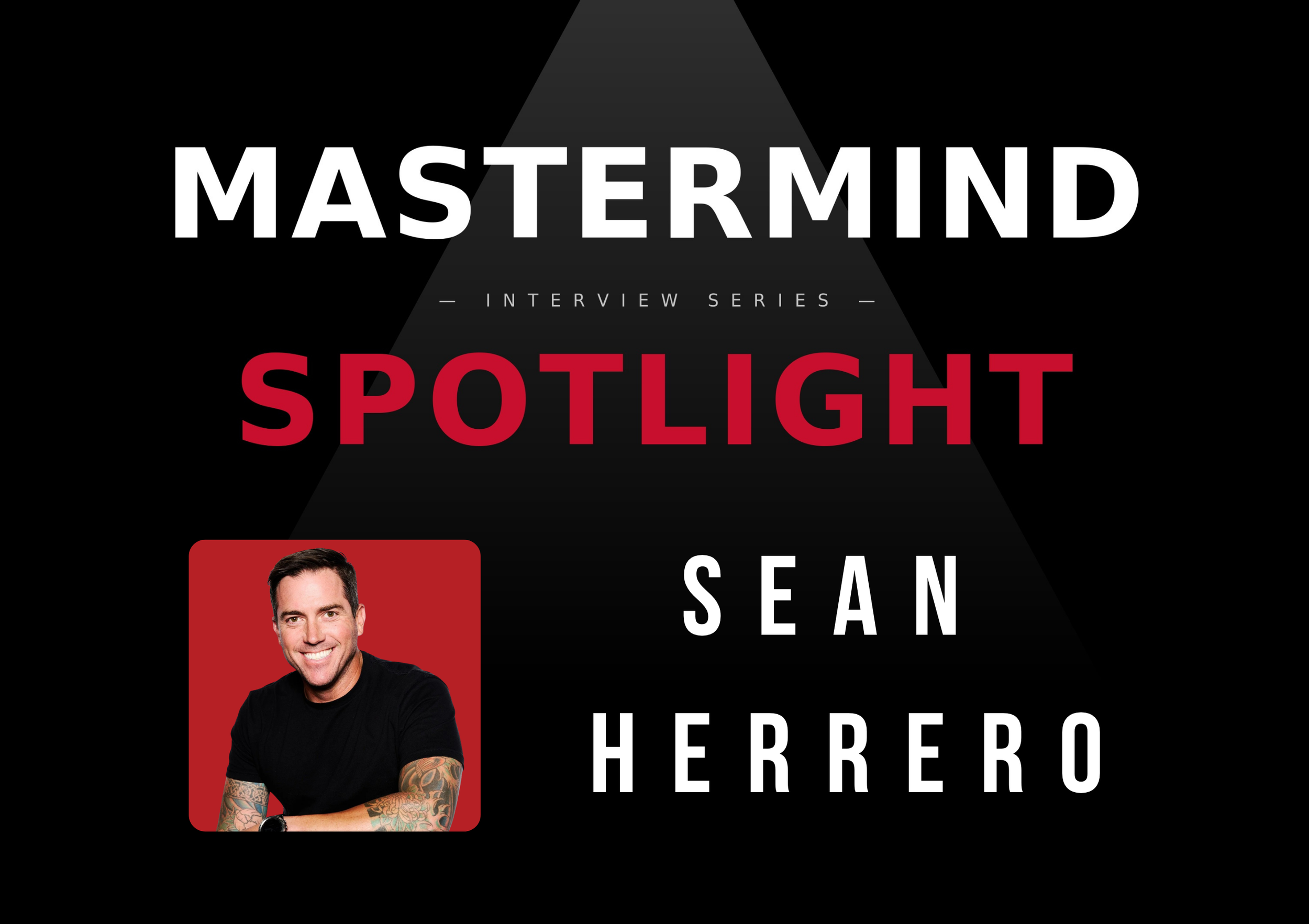
Sean Herrero doesn't fit the mold of a typical top producer. While most loan officers spend their first few years scrambling to find their footing, Sean was already in the top 1% of the industry by 2017, his first year as a mortgage advisor. By 2021, he was funding $220 million in annual production.
Known across the industry as The Adventure Lender, Sean has built his business around a simple idea: people deserve better. Better guidance, better expectations, and a home loan that fits their lifestyle rather than dictating it. He's unflinchingly honest about what's broken in the mortgage industry, equally honest about where he falls short, and refreshingly clear-eyed about where the business is headed.
In this interview, Sean shares his perspective on scaling a mortgage practice, navigating shifting markets, building the right relationships internally and externally, leveraging technology, and what it really takes to stay relevant in an industry being reshaped by AI and changing buyer behavior. Whether you're a new loan officer trying to shortcut the learning curve or a veteran looking for a sharper edge, his answers are worth sitting with.
You entered the mortgage industry and became a top 1% producer in your first year. Most LOs spend years just finding their footing. What did you do differently right out of the gate, and what advice would you give a new loan officer trying to shortcut that learning curve?
What I did was pretty simple. Instead of focusing on sales, I focused on service. I listened to realtors and heard what their struggles were. I looked at the market and found ways to solve problems for buyers and help them win the house they wanted. I listened more than I talked. I have always been a problem solver. It doesn't matter what the problem is. If someone brings something to me, I will find a way to get them what they need.
You've built your brand around "Home Loans for Your Lifestyle," a philosophy rooted in understanding a borrower's personal goals, not just their financials. How does that mindset change the way you run a consultation compared to a more transactional LO, and how has it impacted your referral and repeat business?
I love this question. I think of transactional LOs as "order takers." They quote a rate and tell people what they qualify for. I listen to them and ask questions to understand why buying a home is important. "Why do you want to buy a home?" "What are your goals?" "What do you do for fun?" It's not what you qualify for that matters. It's what you want to qualify for. The way people spend their money varies from person to person. My goal is to ensure they can live their life on their own terms while building memories in their home and building wealth over time. If buying a house means you have to give up everything, don't buy the house. I don't want anyone to be a prisoner in their own home.
You've publicly said that deals falling apart at the last minute are almost never accidents. They're a symptom of expectations not being set properly from the start. Walk us through your process for setting expectations with both borrowers and referral partners at the very beginning of a transaction.
The reason realtors love cash offers is because we lenders screw up all the time. The lender is the biggest variable in the transaction, so I control the variables. I will not issue an approval letter until we have fully reviewed income docs, bank statements, and a full credit report. We front-load the process to ensure our offers look as good as cash. If I know everything is done, I can put my money where my mouth is and guarantee that we can close in as little as 10 days (on everything except VA loans). We build every client a personalized website to ensure they understand the financing inside and out. That way, they can shop with confidence and make a confident offer. Confidence is often more valuable than money.
You went from zero to over $220 million in mortgage production. At what production volume did you realize you had to stop doing everything yourself, and how did you build the team and systems around you to scale without sacrificing the client experience?
Well, that is what I'm really bad at. I'm bad at scaling. From 2017 to 2019, I didn't have any support. I worked on my own with a shared corporate processor, and I funded $75M in 2019. I realized I could do it all on my own, but just because I can doesn't mean it's a good idea. So I hired a production partner in 2020. With her, we did $150M in 2020 and $220M in 2021. That was "my team": me, a Loan Officer Assistant, and a shared company processor. In March of this year, I funded 30 units for $30M, which was a goal I had set back in March of 2025. It took a year, but I did it. And I did it without an LOA—just me and my processor. I hired a new LOA in May and plan to close 30 units every month. Big goals are worth setting. Apply massive pressure to yourself. That's the secret.
The mortgage market has gone through dramatic swings including the refi boom, the rate spike, and the inventory drought. How do you mentally and operationally prepare your business to stay productive through down cycles, and what does your pipeline building strategy look like when the market tightens?
The market doesn't matter. Rates don't matter. These are the two biggest reasons people have for why they aren't where they want to be: "If rates were lower… if the market was better…" Focus on what you can control. There are transactions happening all around us. The market isn't the problem. Rates aren't the problem. Market share is. There were 274,000 residential purchase transactions done in 2025, and I didn't do .1% of them. And that pisses me off. That means people got a lesser experience. They deserve my client experience. So I need to market more to solve more people's problems. That's it. Marketing matters. Market share matters. Mindset matters.
You've been vocal about the evolving relationship between sales and operations, saying the best shops run "sales with ops, not sales vs. ops." How do you personally manage that relationship with your processing and ops team, and what do you think top producers get wrong about that dynamic?
I don't believe in top-down leadership. We are in it together. My job is not more valuable than anyone else's in the process. Humility is a good thing. You can originate 100 loans per month, but if no one is there to close them, who cares? None of us get paid to originate loans. We get paid to close loans. So everyone is equally important: processor, underwriter, doc drawer, funder, etc. We are all in this together, and I treat everyone as my equal. I think I actually put them on a pedestal above me, because I can't do any of this without them.
For loan officers who aren't fully leveraging tech in their sales process yet, what's the one tool or approach that's had the biggest impact on your conversion rate at point of sale and how are you using it?
Mortgage Coach. As a rock climber, we pack in ounces, not pounds. Carry only what you need. I approach tech the same way. I only need a few tools to do what I do. Mortgage Coach is my multi-tool.
Your personal brand "The Adventure Lender" is deeply tied to your identity and lifestyle outside of work. How intentional were you in building that brand, and what role do you think personal brand plays in an LO's long term success versus just being good at the job?
Adventure Lender came to me driving to an event in Lake Tahoe. It sounded catchy. I am very intentional in everything I do. I didn't create it. It's just who I am. That's what a personal brand is. It's who you are. You don't create it. You live it. And if you create one, that means you're being fake. The compliment I get most is "how authentic I am." That's the worst compliment ever. I am being celebrated for not being fake. That's how broken our industry, and really society, has gotten. "Personal brand" shouldn't even be a term. It's just being you and being very comfortable knowing people will want to work with you. Not everyone, but more than enough.
With over 20 years in the industry, you've seen firsthand how AI and shifting buyer behavior are starting to reshape the mortgage business. In your view, what does the loan officer's role look like in five years, and what should LOs be doing right now to make sure they're not commoditized out of the transaction?
If an LO is not using AI to make their client experience better, I don't think they will be here in 5 years. The push to be service-driven instead of sales-driven is more important than ever. A service-driven LO who uses AI and can explain things that AI can't is already massively important. I think humans will reach a place where they want more human interaction, but not from everyone—only from those they feel are guides and can give them confidence.
After more than two decades in this industry and hundreds of millions in closed loans, you clearly still love the work. What keeps you motivated and hungry, and what's the one piece of advice you'd want every loan officer reading this to walk away with?
People deserve better. They deserve a better home buying experience. They deserve better guidance. They deserve to be served, not sold. I love what I do. Every day. I love waking up with new problems to solve, new ideas to implement, and new ways to help more people. I love the challenges that this job provides. Life would be boring otherwise. If you find yourself complaining about the business or the market, stop to ask if the market is the problem, or is it your mindset? There are so many people thriving. I want you to as well.